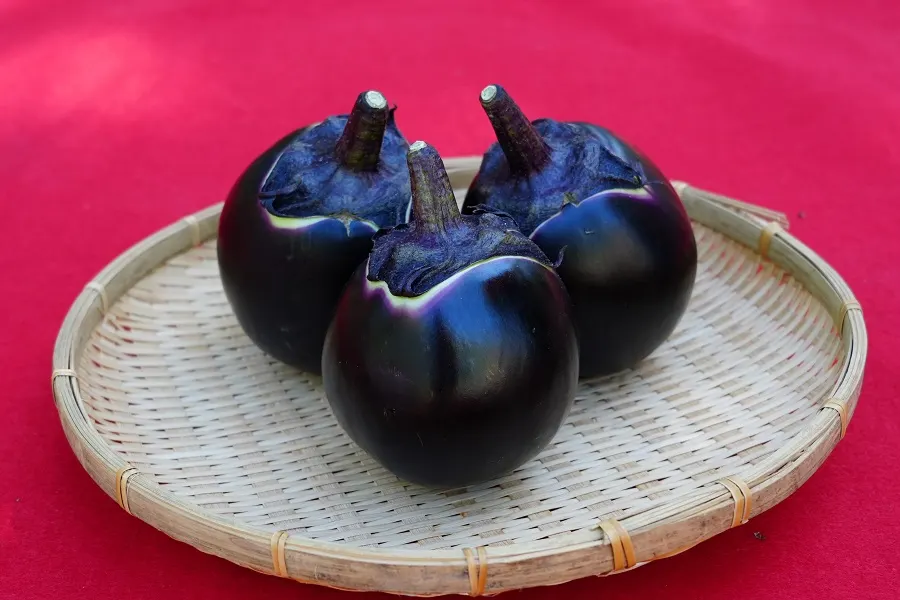
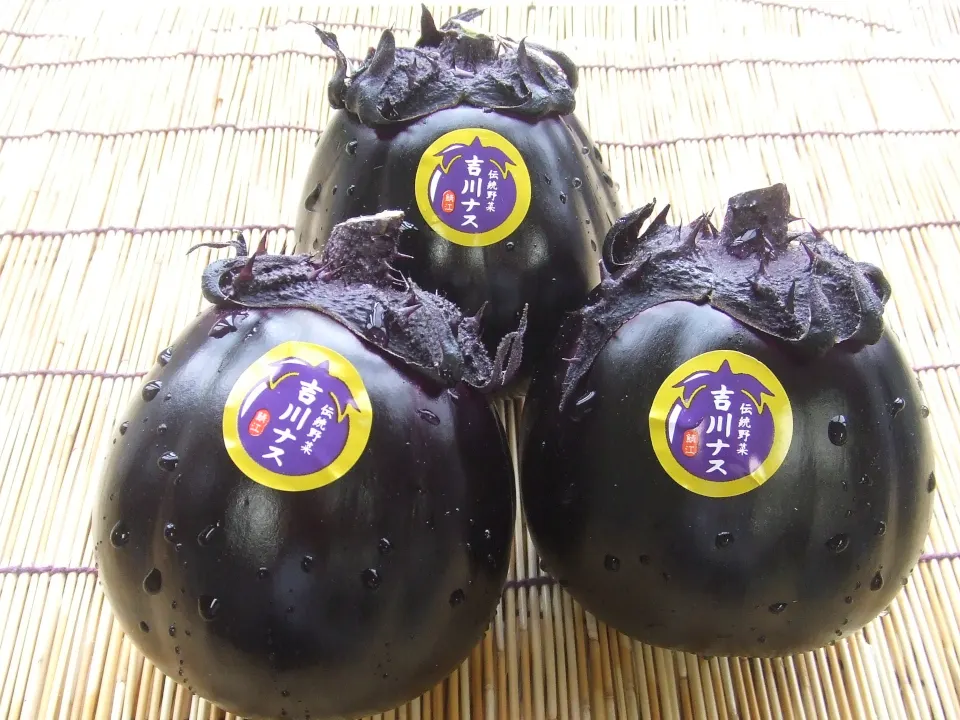
A large round eggplant grown in the Kamigamo area of Kyoto, where farmers save their own seed of a fixed variety and maintain traditional growing methods. Perfectly round with a glossy, deep purple skin, it is thick and silky inside yet holds its shape when cooked, making it prized for nasu dengaku and kaiseki cuisine.
- Prefectures
- Kyoto
- Production area
- Kita Ward and Sakyo Ward, Kyoto City, Kyoto Prefecture
- Season
- May–Aug
- Registered
- March 18, 2025(Reg. No. 165)
- Registered producer group
- Kamigamo Tokusan Yasai Kenkyukai (Kamigamo Specialty Vegetable Research Group) (opens in a new tab)
- Category (as registered)
- 第1類 農産物類 野菜類(なす)
Seasonal calendar
Kamo eggplants in the Kamigamo area are harvested from about mid-May to mid-August.
Timing shifts with the weather and conditions in each region.
Official registration details (MAFF)
The registered description as published by the Ministry of Agriculture, Forestry and Fisheries.
Characteristics
It is a large round eggplant characterized by its circle shape, spines on the calyx, and shiny purple appearance. It is thick and has smooth texture inside, but does not fall apart when cooked, making it a valuable ingredient in traditional local dishes such as "nasu no dengaku" and kaiseki cuisine. It is highly regarded by consumers in markets and restaurants.
Link with the production area
The Kamigamo area, located on a fertile andosol alluvial fan between the Kamo and Takano rivers, flourished as a rural area. Large round eggplants have been cultivated here since the Edo period, and since the Meiji period, Kamonasu eggplants have become a local specialty. In the latter half of the Showa period, while production of smaller Kamonasu eggplants spread to other regions, efforts were made to preserve the characteristics and quality of the eggplants by promoting the cultivation of fixed varieties through self-seeding and the transmission of traditional cultivation techniques. This has helped to preserve the culture of selling eggplants by hand, a tradition dating back to the Heian period, to this day. The eggplant also has deep ties to the Kamigamo Shrine, one of Kyoto's oldest shrines, and Kamonasu is offered during the Aoi Festival and used as an offering to the gods during the New Year.
Characteristics and link with the area: Ministry of Agriculture, Forestry and Fisheries website (https://www.maff.go.jp/e/policies/intel/gi_act/register/250715_6.html)
Where to buy
As a rule, only products that meet the registered standard may use a GI name (with exceptions such as prior use). Check for the GI mark and the place of origin to tell it apart from ordinary products with similar names.
These links go to Japanese-language shops; check whether they ship overseas.
Some shop links on this page are affiliate links; we may earn a commission at no extra cost to you.
The GI "Kyo Kamo Eggplant" is limited to eggplants grown in Kita and Sakyo wards of Kyoto City to the registered production standard, and is distinct from Kamo eggplants in general.
FAQ
A large round eggplant grown in the Kamigamo area of Kyoto, where farmers save their own seed of a fixed variety and maintain traditional growing methods. Perfectly round with a glossy, deep purple skin, it is thick and silky inside yet holds its shape when cooked, making it prized for nasu dengaku and kaiseki cuisine.
Kyo Kamo Eggplant is produced in Kita Ward and Sakyo Ward, Kyoto City, Kyoto Prefecture.
Kyo Kamo Eggplant is in season (harvested or shipped) in May–Aug. Kamo eggplants in the Kamigamo area are harvested from about mid-May to mid-August.
Look for it via online shops. Check the GI mark and the place of origin before you buy.
Kyo Kamo Eggplant was registered as a Geographical Indication on March 18, 2025 (Registration No. 165). The registered producer group is Kamigamo Tokusan Yasai Kenkyukai (Kamigamo Specialty Vegetable Research Group).
More GIs from Kyoto
More Vegetables GIs
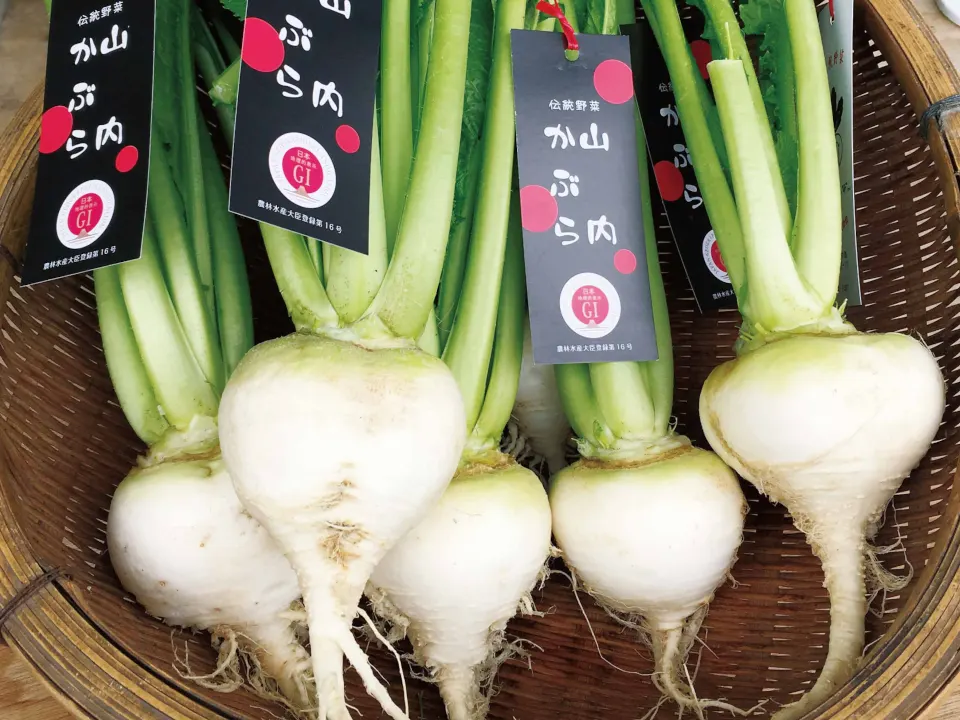
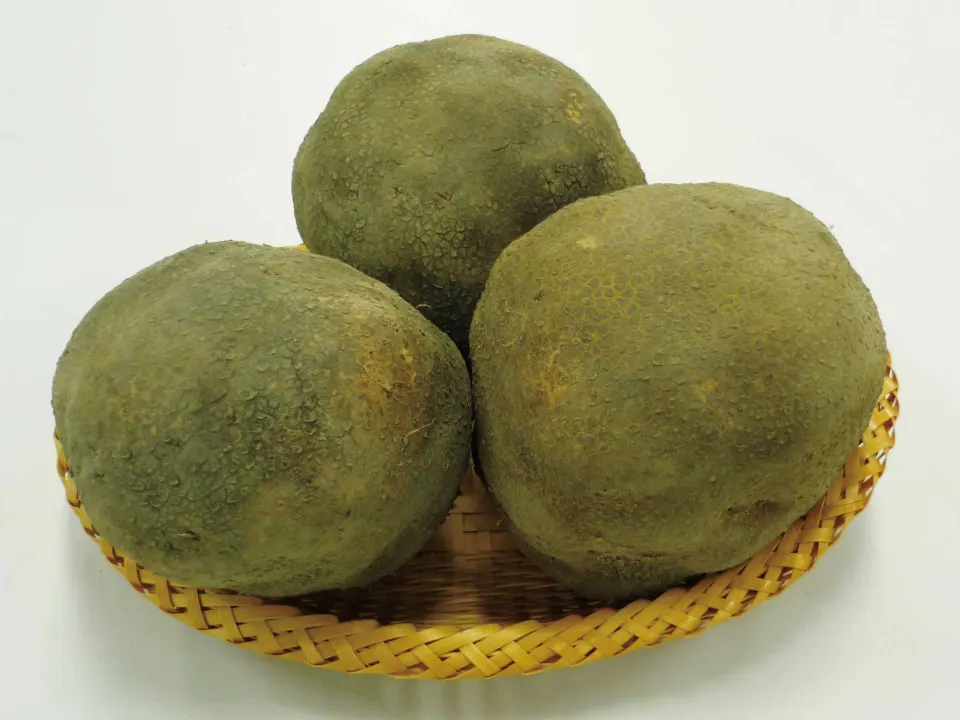
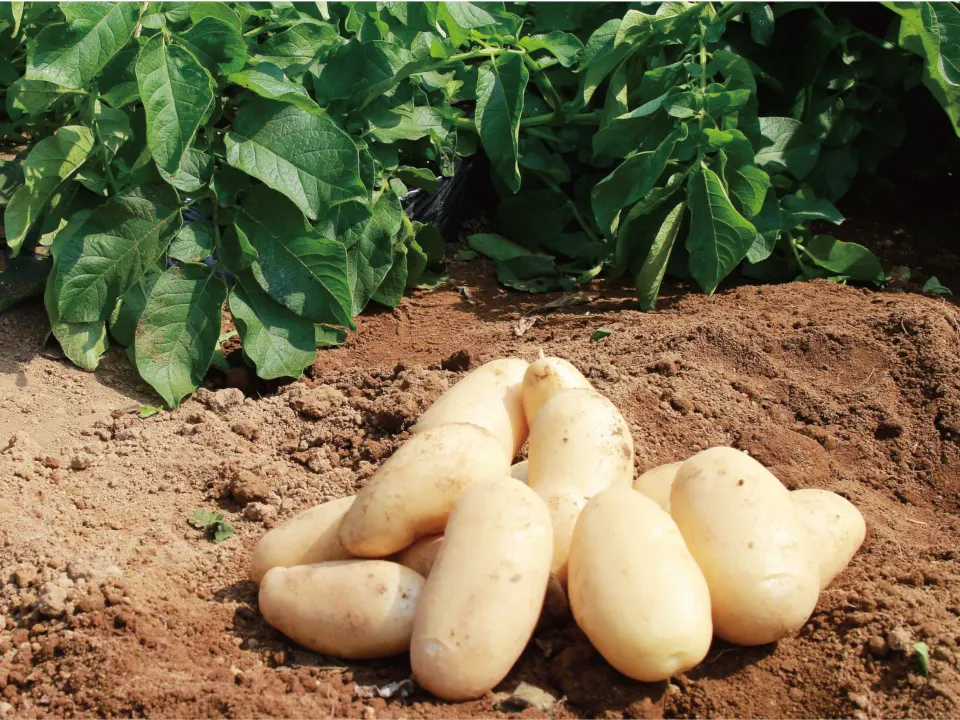
More from Kyoto
Discover the protected animals, festivals, paintings and sights of the same region.
Matsuri Biyori
UNESCO-listed festivals in Kyoto
- Yamahoko, the float ceremony of the Kyoto Gion festival
- Kyoto no Rokusai Nenbutsu
- Yasuraibana
- Kuta no Hanagasa Odori
Meiga no Furusato
Paintings linked to Kyoto
- View of Amanohashidate
- Famous Places in the Sixty-odd Provinces: Yamashiro Province: The Togetsu Bridge at Arashiyama
- Famous Places in the Sixty-odd Provinces: Kawachi Province: Otokoyama from Hirakata
- Famous Places in the Sixty-odd Provinces: Tango Province: Amanohashidate
Sake Tabi
Breweries and distilleries in Kyoto
- Gekkeikan Okura Memorial Museum
- Hakurei Shuzo Brewery Tour
- Kizakura Fushimigura
- Kyoto Tamba Wine Winery Tour
Official information
- MAFF registration page (Japanese) (opens in a new tab)
- MAFF product summary (English) (opens in a new tab)
- Registered product panel (PDF) (opens in a new tab)
This page is produced by Matatabi Inc. It is not created or endorsed by the Ministry of Agriculture, Forestry and Fisheries.