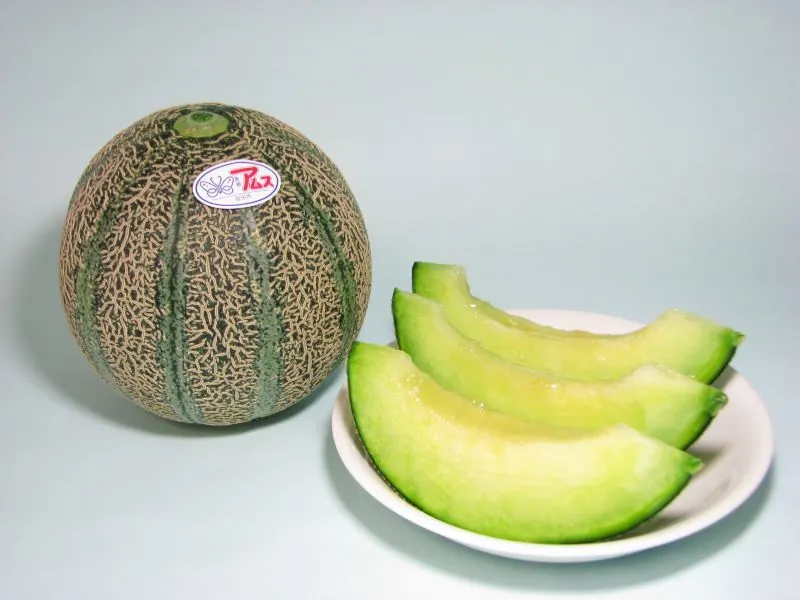
A melon grown in Masuda, Shimane, with plentiful water from the Takatsu River and sandy loam soil. Large, sweet, and juicy, with soft flesh almost up to the rind, it is a popular gift and such a well-known local specialty that Masuda is closely associated with Amus melons.
- Prefectures
- Shimane
- Production area
- Masuda City, Shimane Prefecture
- Season
- May–Jul
- Registered
- January 30, 2025(Reg. No. 162)
- Registered producer group
- Masuda Amusmelon Shinko Kyogikai (Masuda Amusmelon Promotion Council)
- Category (as registered)
- 第1類 農産物類 野菜類(メロン)
Seasonal calendar
The first shipments go out in late May, and the melons are available in early summer.
Timing shifts with the weather and conditions in each region.
Official registration details (MAFF)
The registered description as published by the Ministry of Agriculture, Forestry and Fisheries.
Characteristics
With its large size, sweetness, abundant juice, and its soft and edible flesh that extends close to the skin, this variety is popular as a gift. It is also highly regarded in the market for its consistent quality. It has become a renowned local specialty, so much so that when people mention Masuda, they immediately think of Amusmelon.
Link with the production area
This region has a warm climate within the Japan Sea climate zone, with abundant sunshine during the fruit ripening and maturation periods. It is blessed with a rich water source from the Takatsu River and sandy loam soil suitable for melon cultivation, which has led to its development as a production area.In addition to establishing unique cultivation techniques, including new cultivating methods, the region has collaborated with a fertilizer manufacturer to develop a fertilizer specifically for Masuda Amusmelon. In order to escape from harsh business and labor conditions, the region worked together to develop Amusmelon through trial and error with various items and varieties. This effort was recognized with the Emperor's Cup and has also been featured in a local supplementary textbook.
Characteristics and link with the area: Ministry of Agriculture, Forestry and Fisheries website (https://www.maff.go.jp/e/policies/intel/gi_act/register/250715_9.html)
Where to buy
As a rule, only products that meet the registered standard may use a GI name (with exceptions such as prior use). Check for the GI mark and the place of origin to tell it apart from ordinary products with similar names.
These links go to Japanese-language shops; check whether they ship overseas.
Some shop links on this page are affiliate links; we may earn a commission at no extra cost to you.
FAQ
A melon grown in Masuda, Shimane, with plentiful water from the Takatsu River and sandy loam soil. Large, sweet, and juicy, with soft flesh almost up to the rind, it is a popular gift and such a well-known local specialty that Masuda is closely associated with Amus melons.
Masuda Amus Melon is produced in Masuda City, Shimane Prefecture.
Masuda Amus Melon is in season (harvested or shipped) in May–Jul. The first shipments go out in late May, and the melons are available in early summer.
Look for it via furusato nozei (hometown tax donation). Check the GI mark and the place of origin before you buy.
Masuda Amus Melon was registered as a Geographical Indication on January 30, 2025 (Registration No. 162). The registered producer group is Masuda Amusmelon Shinko Kyogikai (Masuda Amusmelon Promotion Council).
More GIs from Shimane
More Fruit GIs
More from Shimane
Discover the protected animals, festivals, paintings and sights of the same region.
Meiga no Furusato
Paintings linked to Shimane
- Famous Places in the Sixty-odd Provinces: Izumo Province: Hotohoto Festival at Izumo Shrine
- Famous Places in the Sixty-odd Provinces: Iwami Province: Salt Beaches near Takatsu Hill
- Famous Places in the Sixty-odd Provinces: Oki Province: Takuhi Shrine
- Innocence
Official information
- MAFF registration page (Japanese) (opens in a new tab)
- MAFF product summary (English) (opens in a new tab)
- Registered product panel (PDF) (opens in a new tab)
This page is produced by Matatabi Inc. It is not created or endorsed by the Ministry of Agriculture, Forestry and Fisheries.