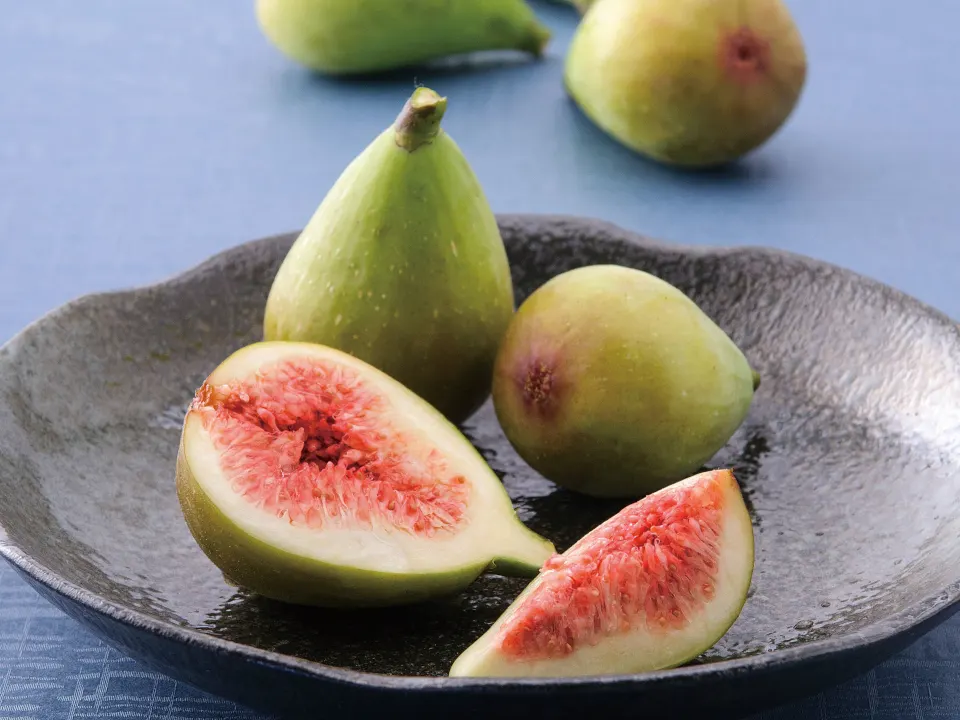
A small fig from Nikaho City, Akita, whose skin stays green even when ripe. Grown mainly for processing such as sweet simmered preserves, it is picked while still firm and is valued for its aroma, refined sweetness, and texture that holds up well in cooking.
- Prefectures
- Akita
- Production area
- Nikaho City, Akita Prefecture
- Season
- Sep–Oct
- Registered
- March 30, 2020(Reg. No. 93)
- Registered producer group
- Otake Fig Association
- Category (as registered)
- 第1類 農産物類 果実類(いちじく)
Seasonal calendar
Peak production runs from September to October.
Timing shifts with the weather and conditions in each region.
Official registration details (MAFF)
The registered description as published by the Ministry of Agriculture, Forestry and Fisheries.
Characteristics
Otake Ichijiku fig can be eaten without removing its skin, which remains green even after the fruit is ripe. Fruit sizes are relatively small. Produced primarily for processing, the fruit is harvested while still unripe and hard, and sorted accurately according to size for shipment. The fruit is rated highly as an ingredient for various processed foods because of its excellent color, superior fragrance, subtle sweetness, and optimal firmness that allows it to cook without losing its shape. Prices are therefore higher than figs for processing that come from other parts of the country.
Link with the production area
Nikaho City is well-suited to growing fig, which is sensitive to low temperatures. The city is warmer with less snowfall than other parts of Akita due to its location on the southern coastal area of the prefecture. Locals have traditionally made figs simmered in syrup for long-term preservation over the winter months. Fig production has been developed into a local industry through community-wide efforts including the adoption of cold-hardy varieties of fig; developing new fig orchards; improving cultivation techniques; and implementing quality control.
Characteristics and link with the area: Ministry of Agriculture, Forestry and Fisheries website (https://www.maff.go.jp/e/policies/intel/gi_act/register/s93.html)
Where to buy
As a rule, only products that meet the registered standard may use a GI name (with exceptions such as prior use). Check for the GI mark and the place of origin to tell it apart from ordinary products with similar names.
We have not found a reliable online or furusato nozei listing yet. Ask local farm stands or the producer group.
FAQ
A small fig from Nikaho City, Akita, whose skin stays green even when ripe. Grown mainly for processing such as sweet simmered preserves, it is picked while still firm and is valued for its aroma, refined sweetness, and texture that holds up well in cooking.
Otake Fig is produced in Nikaho City, Akita Prefecture.
Otake Fig is in season (harvested or shipped) in Sep–Oct. Peak production runs from September to October.
We have not confirmed a reliable online or furusato nozei listing. Local farm stands or the producer group are your best bet.
Otake Fig was registered as a Geographical Indication on March 30, 2020 (Registration No. 93). The registered producer group is Otake Fig Association.
More GIs from Akita
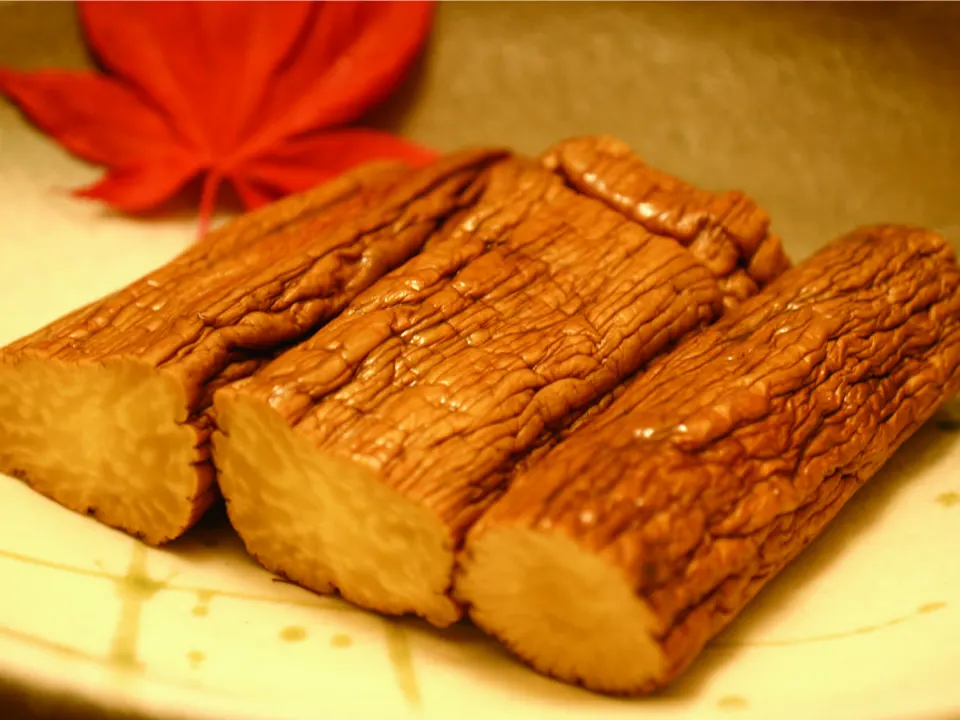
More Fruit GIs
More from Akita
Discover the protected animals, festivals, paintings and sights of the same region.
Matsuri Biyori
UNESCO-listed festivals in Akita
- Kakunodate Festival Yama Float Event
- Tsuchizaki Shinmeisha Shrine Festival Hikiyama Float Event
- Hanawa Festival Yatai Float Event
- Nishimonai no Bon Odori
Meiga no Furusato
Paintings linked to Akita
- The Senjomaku Cliffs, Lake Towada (Souvenirs of Travel I)
- Hachirogata Lagoon, Akita
- Kansa Shrine, Lake Tazawa
- Shinobazu Pond
Sake Tabi
Breweries and distilleries in Akita
- Kimura Brewery (Fukukomachi)
- Fukunotomo Brewery
- Bishu Ranman (Akita Meijo)
- Takashimizu Brewery Tour (Akita Shurui Seizo Head Brewery)
Official information
- MAFF registration page (Japanese) (opens in a new tab)
- MAFF product summary (English) (opens in a new tab)
- Registered product panel (PDF) (opens in a new tab)
This page is produced by Matatabi Inc. It is not created or endorsed by the Ministry of Agriculture, Forestry and Fisheries.