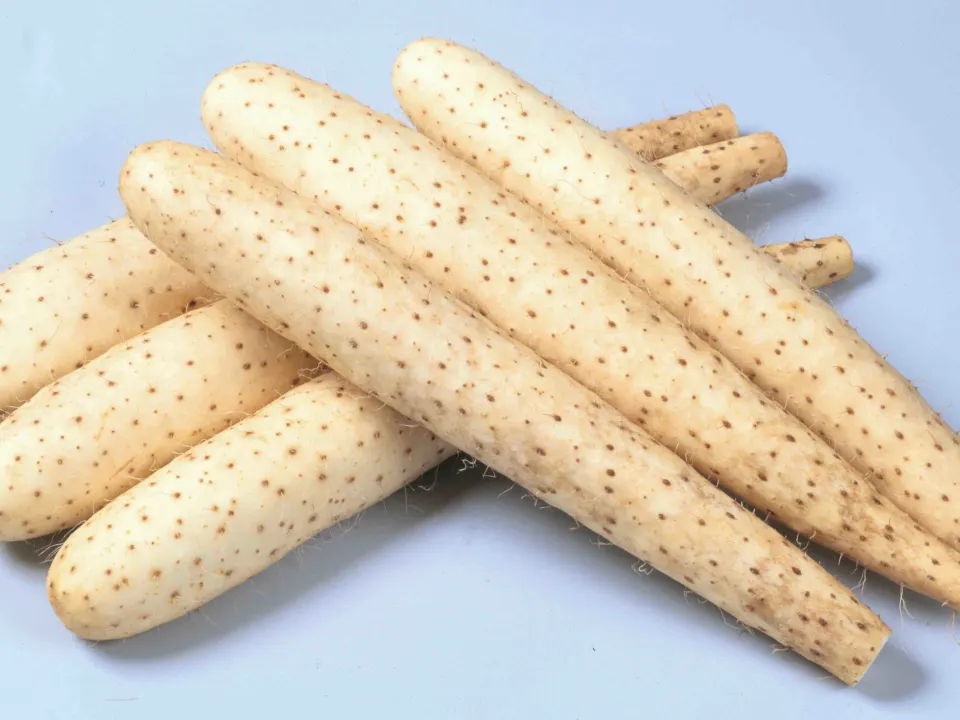
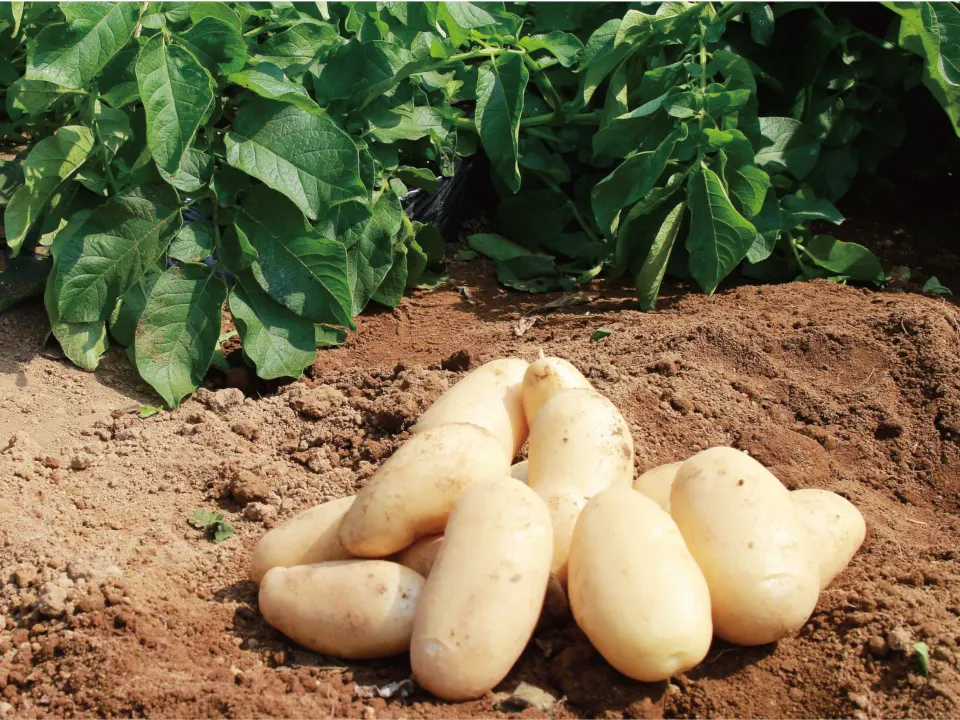
Tokachi Kawanishi Nagaimo is a Chinese yam grown in ten municipalities of the Tokachi region of Hokkaido, including Obihiro. It is short and bottle-shaped, with white skin and flesh that resist browning. It has a pleasant crunch, becomes very sticky when grated, and is widely exported.
- Prefectures
- Hokkaido
- Production area
- Obihiro City, Memuro Town, Nakasatsunai Village, Shimizu Town, Shintoku Town, Ikeda Town, Ashoro Town, Urahoro Town, Shikaoi Town and Toyokoro Town, Hokkaido
- Season
- Year-round
- Registered
- October 12, 2016(Reg. No. 21)
- Registered producer group
- Tokachi Kawanishi Nagaimo Promotion Association
- Category (as registered)
- 第1類 農産物類 野菜類(やまのいも)
Seasonal calendar
Shipped year-round: harvested in autumn from late October, with some left in the ground over winter and dug in spring, around April.
Timing shifts with the weather and conditions in each region.
Official registration details (MAFF)
The registered description as published by the Ministry of Agriculture, Forestry and Fisheries.
Characteristics
TOKACHI KAWANISHI NAGAIMO is a short and bottle-shaped yam. Both inside and outside of the yam is white and does not easily turn brown. It has a nice crunchy texture and becomes very sticky when it is grated.
Link with the production area
The yam is produced in thick andosol soils in the area. The characteristics of the yam has been preserved through the strict management of seeds such as the implementation of isolated culture of high-grade seeds, as well as selections and cultivations of disease-free breeds.
Characteristics and link with the area: Ministry of Agriculture, Forestry and Fisheries website (https://www.maff.go.jp/e/policies/intel/gi_act/register/s21.html)
Where to buy
As a rule, only products that meet the registered standard may use a GI name (with exceptions such as prior use). Check for the GI mark and the place of origin to tell it apart from ordinary products with similar names.
These links go to Japanese-language shops; check whether they ship overseas.
Some shop links on this page are affiliate links; we may earn a commission at no extra cost to you.
FAQ
Tokachi Kawanishi Nagaimo is a Chinese yam grown in ten municipalities of the Tokachi region of Hokkaido, including Obihiro. It is short and bottle-shaped, with white skin and flesh that resist browning. It has a pleasant crunch, becomes very sticky when grated, and is widely exported.
Tokachi Kawanishi Nagaimo Yam is produced in Obihiro City, Memuro Town, Nakasatsunai Village, Shimizu Town, Shintoku Town, Ikeda Town, Ashoro Town, Urahoro Town, Shikaoi Town and Toyokoro Town, Hokkaido.
Tokachi Kawanishi Nagaimo Yam is shipped all year round. Shipped year-round: harvested in autumn from late October, with some left in the ground over winter and dug in spring, around April.
Look for it via online shops and the producer group's own shop. Check the GI mark and the place of origin before you buy.
Tokachi Kawanishi Nagaimo Yam was registered as a Geographical Indication on October 12, 2016 (Registration No. 21). The registered producer group is Tokachi Kawanishi Nagaimo Promotion Association.
More GIs from Hokkaido
More Vegetables GIs
More from Hokkaido
Discover the protected animals, festivals, paintings and sights of the same region.
Ikimono Kokuho
Natural Monument animals of Hokkaido
- Red-crowned Crane
- Freija Fritillary (Asahidake subspecies)
- Daisetsu Arctic Butterfly (Melissa Arctic)
- Grizzled Skipper (Hokkaido population)
Meiga no Furusato
Paintings linked to Hokkaido
- Ainu Banquet, Folding Screen
- Preparatory Drawings for Portraits of Ainu Chiefs (Ishu Retsuzo)
- Morning Prayer
- Orchestra
Sake Tabi
Breweries and distilleries in Hokkaido
- Furano Winery
- Hokkaido Wine (Otaru Wine Gallery)
- Ikeda Wine Castle (Tokachi Wine)
- Kirin Brewery Hokkaido Chitose Brewery
Official information
- MAFF registration page (Japanese) (opens in a new tab)
- MAFF product summary (English) (opens in a new tab)
- Registered product panel (PDF) (opens in a new tab)
This page is produced by Matatabi Inc. It is not created or endorsed by the Ministry of Agriculture, Forestry and Fisheries.