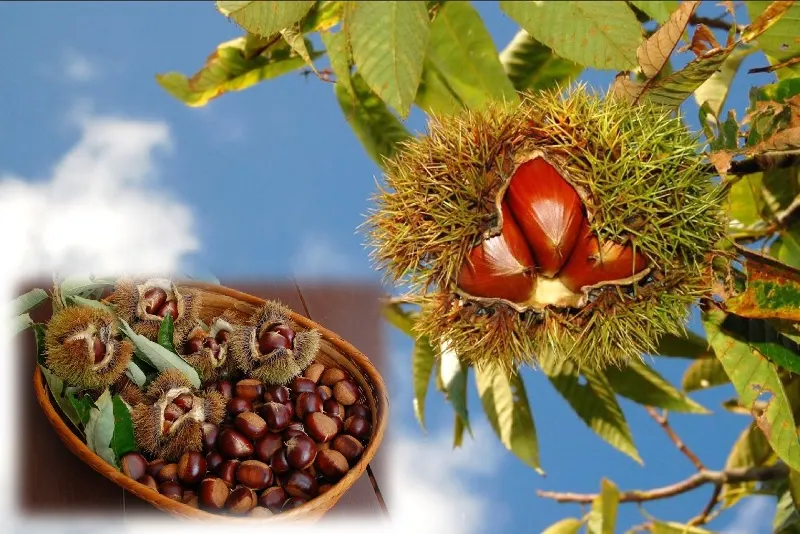
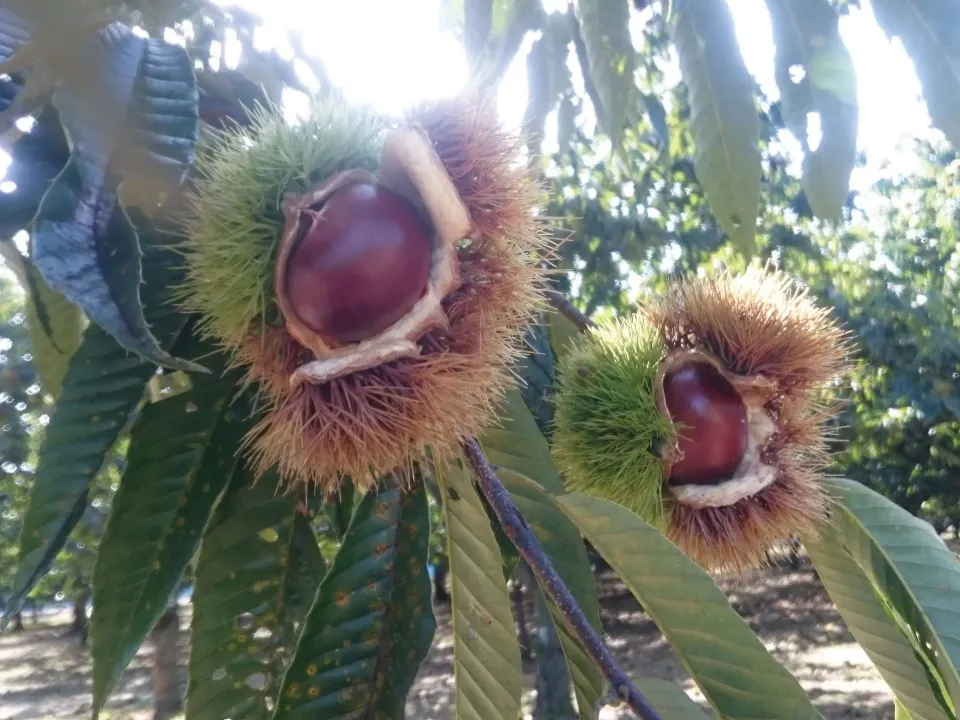
Chestnuts grown as a village-wide effort in Yamae, Kumamoto, where forest covers about 90 percent of the land. Pastry chefs and cooks prize their strong sweetness and true chestnut flavor and aroma, and sweets made from them have been served as desserts on luxury cruise trains and in international first class.
- Prefectures
- Kumamoto
- Production area
- Yamae Village, Kuma District, Kumamoto Prefecture
- Season
- Sep–Oct
- Registered
- March 27, 2024(Reg. No. 151)
- Registered producer group
- やまえ栗振興協議会 (opens in a new tab)
- Category (as registered)
- 第1類 農産物類 果実類(くり)
Seasonal calendar
New-crop chestnuts are generally available from around September to October.
Timing shifts with the weather and conditions in each region.
Official registration details (MAFF)
Characteristics
Its strong sweetness and authentic chestnut flavor and aroma are highly valued by pastry chefs and cooks, and sweets made with Yamae chestnuts are served as desserts on luxury cruise trains and in international first class. Consumers firmly associate Yamae Village with Yamae chestnuts, and they have become a specialty product that supports the village's tourism and economy.
Link with the production area
Forests cover about 90 percent of the village, and wild mountain chestnuts were plentiful, so chestnuts were paid as taxes in the Edo period. From the beginning of the Showa era, the whole village worked to grow high-quality chestnuts, and their recognition grew, including through their presentation to Emperor Showa. Eighty percent of farmers grow Yamae chestnuts, and the village has enacted the Yamae Chestnut Ordinance, promoting community development centered on the chestnuts as the "treasure of the village."
Characteristics and link with the area: Ministry of Agriculture, Forestry and Fisheries website (https://www.maff.go.jp/j/shokusan/gi_act/register/0151/index.html) The English text is our translation of the Japanese original.
Where to buy
As a rule, only products that meet the registered standard may use a GI name (with exceptions such as prior use). Check for the GI mark and the place of origin to tell it apart from ordinary products with similar names.
These links go to Japanese-language shops; check whether they ship overseas.
Some shop links on this page are affiliate links; we may earn a commission at no extra cost to you.
Processed products such as chestnuts simmered in their inner skins and chestnut sweets are the main year-round options; fresh chestnuts are available only in season.
FAQ
Chestnuts grown as a village-wide effort in Yamae, Kumamoto, where forest covers about 90 percent of the land. Pastry chefs and cooks prize their strong sweetness and true chestnut flavor and aroma, and sweets made from them have been served as desserts on luxury cruise trains and in international first class.
Yamae Chestnut is produced in Yamae Village, Kuma District, Kumamoto Prefecture.
Yamae Chestnut is in season (harvested or shipped) in Sep–Oct. New-crop chestnuts are generally available from around September to October.
Look for it via furusato nozei (hometown tax donation) and online shops. Check the GI mark and the place of origin before you buy.
Yamae Chestnut was registered as a Geographical Indication on March 27, 2024 (Registration No. 151). The registered producer group is やまえ栗振興協議会.
More GIs from Kumamoto
More Fruit GIs
More from Kumamoto
Discover the protected animals, festivals, paintings and sights of the same region.
Ikimono Kokuho
Natural Monument animals of Kumamoto
- Moore's Cupid (Goishi-tsubame-shijimi)
- Tortoiseshell Salamander
- Kurekodori (Kureko chicken)
- Amami Whipscorpion
Meiga no Furusato
Paintings linked to Kumamoto
- Famous Places in the Sixty-odd Provinces: Chikugo Province: Fish Weirs in the Rapids
- Famous Places in the Sixty-odd Provinces: Higo Province: Gokanosho
Official information
- MAFF registration page (Japanese) (opens in a new tab)
- Registered product panel (PDF) (opens in a new tab)
This page is produced by Matatabi Inc. It is not created or endorsed by the Ministry of Agriculture, Forestry and Fisheries.