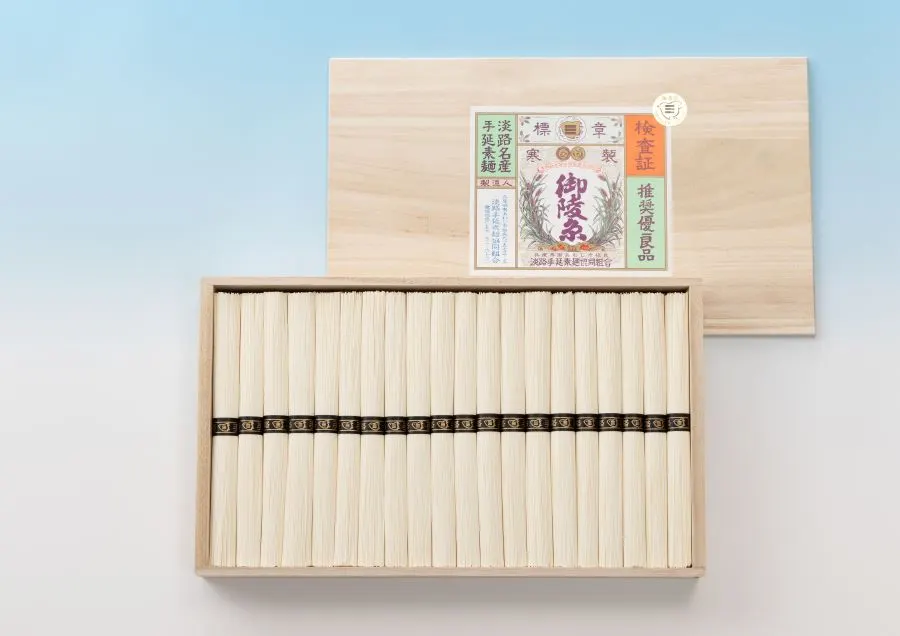
Awajishima Tenobe Somen (Hand-Stretched Noodles)
淡路島手延べそうめん(あわじしまてのべそうめん)
Hand-stretched somen made in Minamiawaji, Hyogo, only during the cold months from October to April, also called Awaji somen. The noodles are prized for their thinness, smooth slurp, firm texture, and refined flavor. The sight of noodles drying in the sun, a practice since the Edo period, is called the "art of white threads" and is a familiar winter scene.
- Prefectures
- Hyogo
- Production area
- Minamiawaji City, Hyogo Prefecture
- Season
- Season not confirmed
- Registered
- March 25, 2026(Reg. No. 176)
- Registered producer group
- Awaji Tenobe Somen Cooperative Association (opens in a new tab)
- Category (as registered)
- 第5類 農産加工品類
Seasonal calendar
Production is limited to October through April, but the noodles are available year-round.
Timing shifts with the weather and conditions in each region.
Official registration details (MAFF)
The registered description as published by the Ministry of Agriculture, Forestry and Fisheries.
Characteristics
Awajishima Tenobe Somen is highly regarded by specialty somen restaurants, long-established ryokan inns, and other establishments for the thinness of its noodles, their smoothness when swallowed, and their firm, resilient texture, as well as for its refined flavor and the rarity arising from its traditional production methods. The sight of the noodles being dried in the sun, a practice that has continued since the Edo period, is known as the “art of white threads.” This sight has become a familiar and cherished winter tradition rooted in island life.
Link with the production area
The winter climate during the production season is relatively mild. The Yuzuruha Mountains moderate the seasonal winter winds, and the area has a dry climate with little rain or snow. These factors provide optimal natural conditions for producing high-quality hand-stretched somen. Distinctive production methods for improving quality have been passed down since the Edo period. These include the blending of ingredients, the duration of noodle maturation, the method of kado-boshi (the final production process in which the noodles are stretched), and the restriction of production to a specified season.
Characteristics and link with the area: Ministry of Agriculture, Forestry and Fisheries website (https://www.maff.go.jp/e/policies/intel/gi_act/register/s176.html)
Where to buy
As a rule, only products that meet the registered standard may use a GI name (with exceptions such as prior use). Check for the GI mark and the place of origin to tell it apart from ordinary products with similar names.
These links go to Japanese-language shops; check whether they ship overseas.
Some shop links on this page are affiliate links; we may earn a commission at no extra cost to you.
FAQ
Hand-stretched somen made in Minamiawaji, Hyogo, only during the cold months from October to April, also called Awaji somen. The noodles are prized for their thinness, smooth slurp, firm texture, and refined flavor. The sight of noodles drying in the sun, a practice since the Edo period, is called the "art of white threads" and is a familiar winter scene.
Awajishima Tenobe Somen (Hand-Stretched Noodles) is produced in Minamiawaji City, Hyogo Prefecture.
Look for it via furusato nozei (hometown tax donation) and online shops. Check the GI mark and the place of origin before you buy.
Awajishima Tenobe Somen (Hand-Stretched Noodles) was registered as a Geographical Indication on March 25, 2026 (Registration No. 176). The registered producer group is Awaji Tenobe Somen Cooperative Association.
More GIs from Hyogo
More Processed foods GIs
More from Hyogo
Discover the protected animals, festivals, paintings and sights of the same region.
Meiga no Furusato
Paintings linked to Hyogo
- Famous Places in the Sixty-odd Provinces: Tanba Province: Kane Slope
- Famous Places in the Sixty-odd Provinces: Tajima Province: The Cave Kannon in Iwai Valley
- Famous Places in the Sixty-odd Provinces: Harima Province: Maiko Beach
- Famous Places in the Sixty-odd Provinces: Awaji Province: Goshiki Beach
Sake Tabi
Breweries and distilleries in Hyogo
- Eigashima Shuzo (sake brewery and whisky distillery tour)
- Hakutsuru Sake Brewery Museum
- Shirayuki Brewery Village Choujugura Brewery Museum (Konishi Brewing)
- Kikumasamune Sake Museum
Official information
- MAFF registration page (Japanese) (opens in a new tab)
- MAFF product summary (English) (opens in a new tab)
- Registered product panel (PDF) (opens in a new tab)
This page is produced by Matatabi Inc. It is not created or endorsed by the Ministry of Agriculture, Forestry and Fisheries.