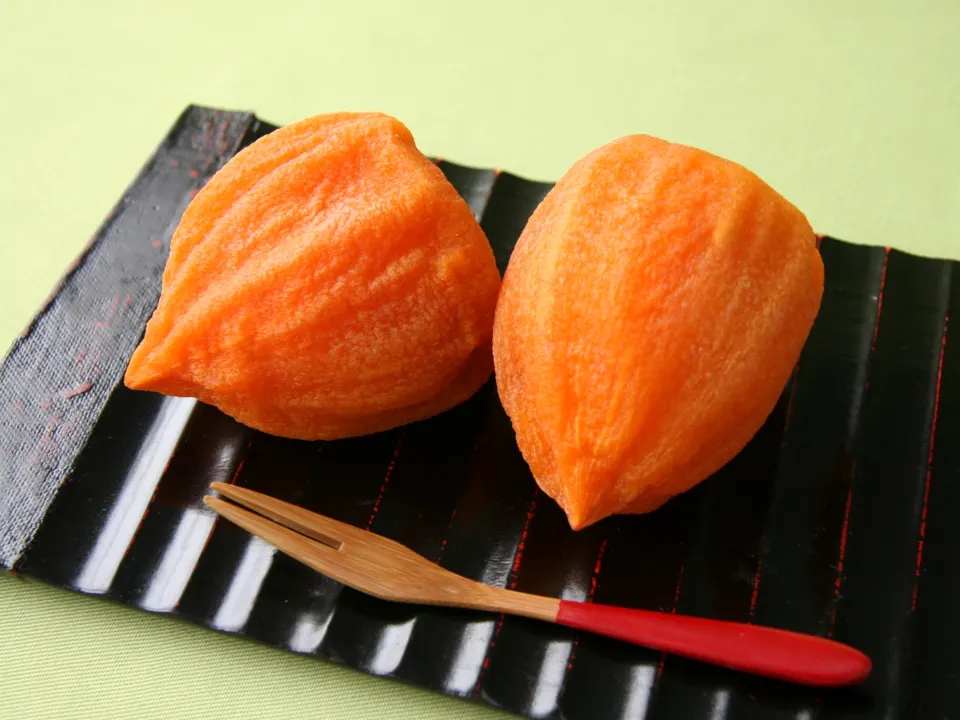
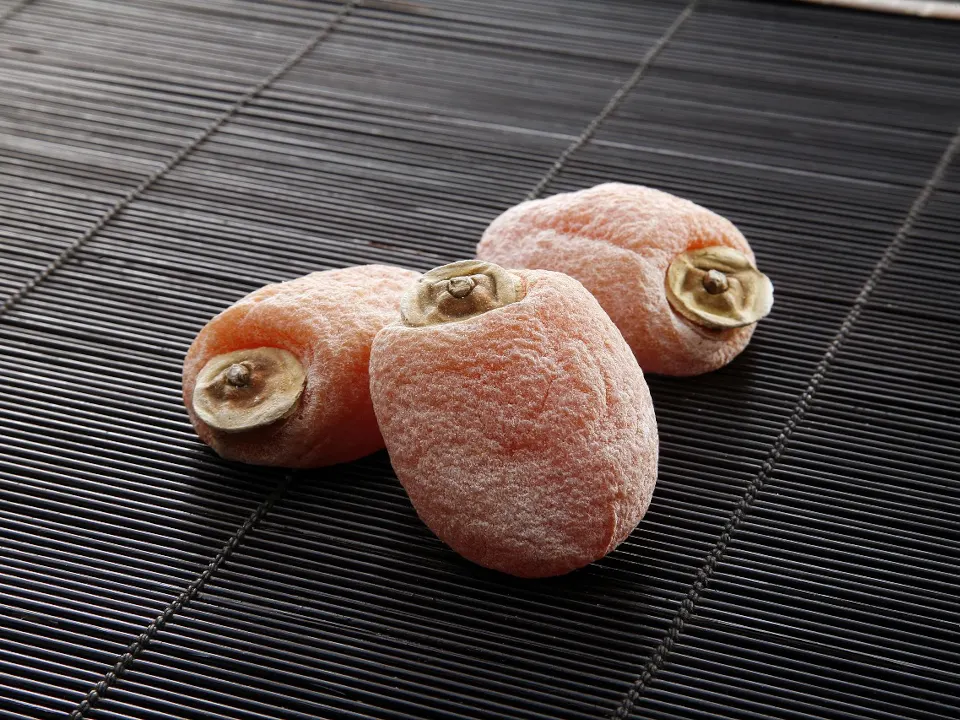
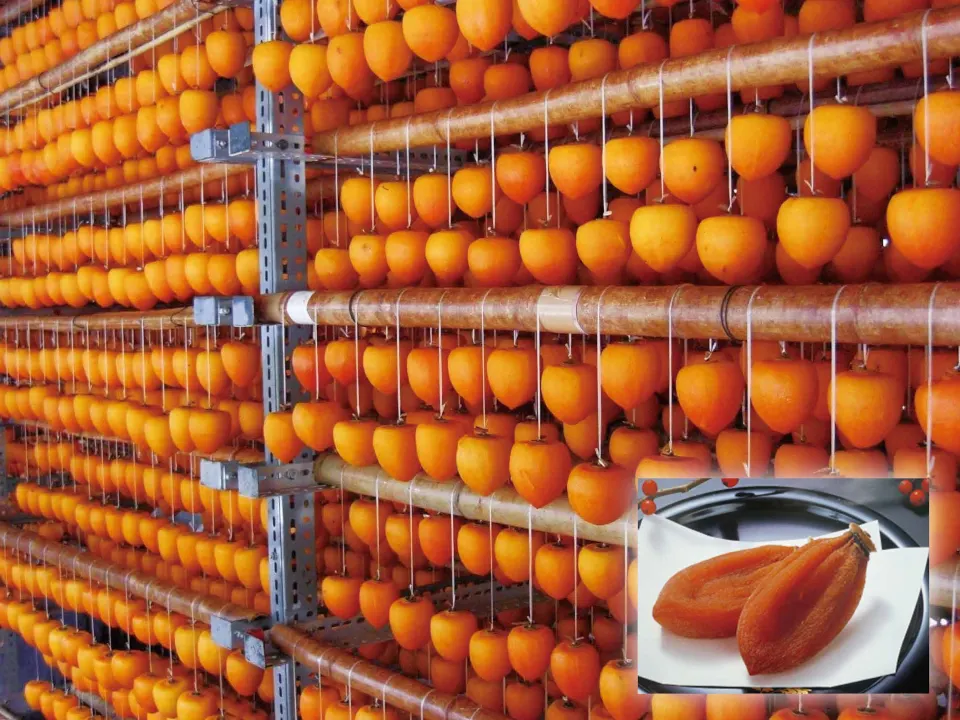
Semi-dried persimmons from the Date area of Fukushima, regarded as the birthplace of anpo gaki. They have vivid orange flesh, a soft, smooth texture and refined sweetness. The sight of persimmons hung like curtains to dry, called kakibase, is a symbol of winter in the area.
- Production area
- Date City, Kunimi Town, Koori Town, Fukushima City (Tatsugoyama, Iizaka, Miyashiro, Okabe, Ozaso and Onami) and Kawamata Town (Iizaka) in Fukushima Prefecture; Shiroishi City (Kosugo and Odaira) in Miyagi Prefecture
- Season
- Dec–Mar
- Registered
- January 31, 2023(Reg. No. 123)
- Registered producer group
- Date Region Anpo Gaki Liaison Council
- Category (as registered)
- 第5類 農産加工品類 果実加工品(干柿)
Seasonal calendar
Available from about December to March, peaking from mid-December through February.
Timing shifts with the weather and conditions in each region.
Official registration details (MAFF)
The registered description as published by the Ministry of Agriculture, Forestry and Fisheries.
Characteristics
The juicy-looking vivid orange flesh of this dried persimmon is soft, with a meltingly pleasant mouthfeel and a sweetness that is not overpowering. Bright-orange "curtains" of row upon row of persimmons being line-dried under the sun (an activity known locally as kakibase) is a ubiquitous winter sight in areas where production takes place.
Link with the production area
Communities in and around the Fukushima Basin formed by the Abukuma and Ou Mountains are said to be the birthplace of anpo-gaki, where in the early 20th century methods of sulfur fumigation for preserving the fruit's natural vivid color were established. The term anpo-gaki, in use since the Meiji era (late 19C-early 20C), is a local dialect for sun-dried persimmon, widely produced because the local climate--large diurnal temperature range and small rainfall--is ideal for the production of both persimmon fruits and dried persimmon.
Characteristics and link with the area: Ministry of Agriculture, Forestry and Fisheries website (https://www.maff.go.jp/e/policies/intel/gi_act/register/s123.html)
Where to buy
As a rule, only products that meet the registered standard may use a GI name (with exceptions such as prior use). Check for the GI mark and the place of origin to tell it apart from ordinary products with similar names.
These links go to Japanese-language shops; check whether they ship overseas.
Some shop links on this page are affiliate links; we may earn a commission at no extra cost to you.
FAQ
Semi-dried persimmons from the Date area of Fukushima, regarded as the birthplace of anpo gaki. They have vivid orange flesh, a soft, smooth texture and refined sweetness. The sight of persimmons hung like curtains to dry, called kakibase, is a symbol of winter in the area.
Date no Anpo Gaki Dried Persimmon is produced in Date City, Kunimi Town, Koori Town, Fukushima City (Tatsugoyama, Iizaka, Miyashiro, Okabe, Ozaso and Onami) and Kawamata Town (Iizaka) in Fukushima Prefecture; Shiroishi City (Kosugo and Odaira) in Miyagi Prefecture.
Date no Anpo Gaki Dried Persimmon is in season (harvested or shipped) in Dec–Mar. Available from about December to March, peaking from mid-December through February.
Look for it via furusato nozei (hometown tax donation) and online shops. Check the GI mark and the place of origin before you buy.
Date no Anpo Gaki Dried Persimmon was registered as a Geographical Indication on January 31, 2023 (Registration No. 123). The registered producer group is Date Region Anpo Gaki Liaison Council.
More GIs from Fukushima
More Processed foods GIs
More from Fukushima
Discover the protected animals, festivals, paintings and sights of the same region.
Meiga no Furusato
Paintings linked to Fukushima
- Wakamatsu, Aizu District, Oshu (Famous Places in the Provinces of Japan)
- Landscape of Mt. Kuriko
- Enfance de Bretagne
- Infant and His Sister
Official information
- MAFF registration page (Japanese) (opens in a new tab)
- MAFF product summary (English) (opens in a new tab)
- Registered product panel (PDF) (opens in a new tab)
This page is produced by Matatabi Inc. It is not created or endorsed by the Ministry of Agriculture, Forestry and Fisheries.