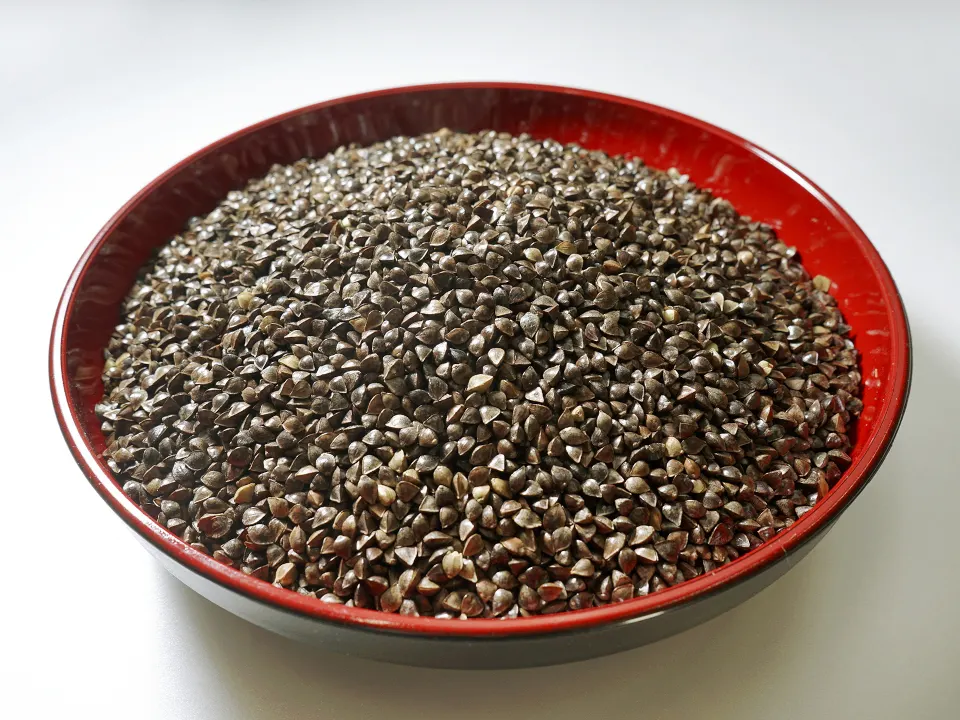
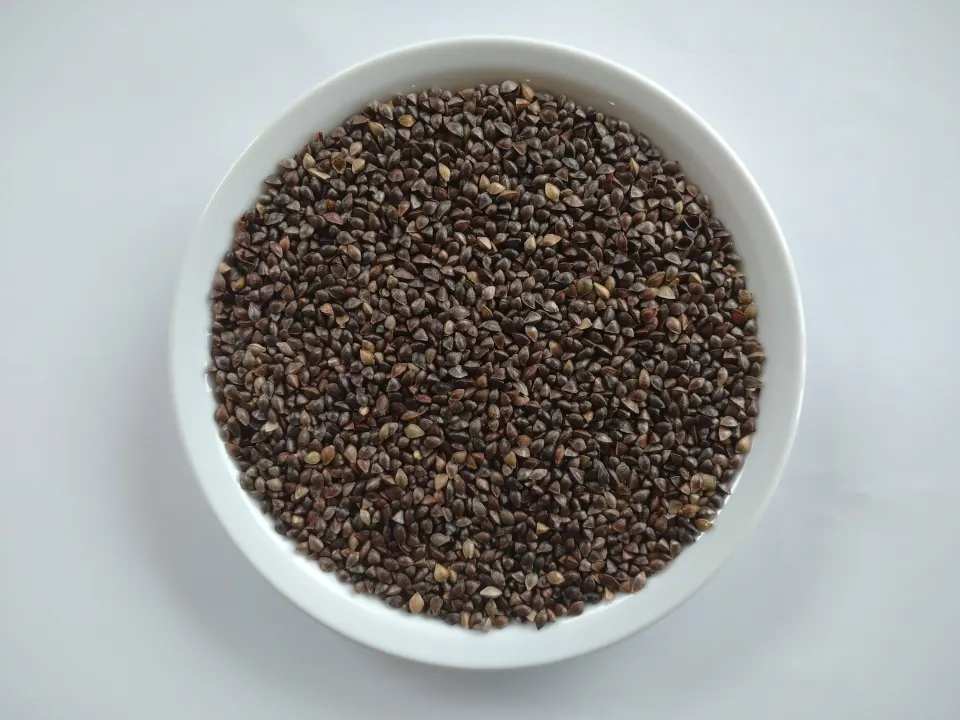
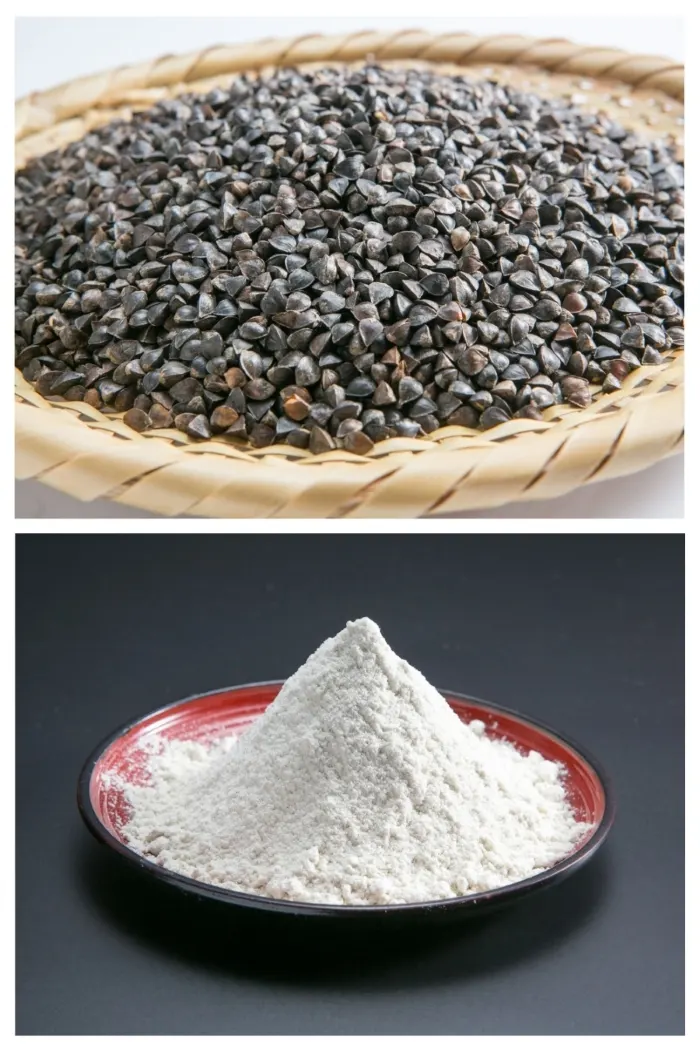
A native buckwheat from Maibara City, Shiga Prefecture, long grown on the slopes of Mount Ibuki. The grains are small, mostly 4.5 mm or less across, and a large share of seed coat gives a greenish tint and strong aroma. Its umami and sweetness are well regarded by soba millers and restaurants.
- Prefectures
- Shiga
- Production area
- Maibara City, Shiga Prefecture
- Season
- Season not confirmed
- Registered
- September 9, 2019(Reg. No. 85)
- Registered producer group
- Ibuki Soba Production Association
- Category (as registered)
- 第1類 農産物類 穀物類(そば)
Official registration details (MAFF)
The registered description as published by the Ministry of Agriculture, Forestry and Fisheries.
Characteristics
Ibuki Soba is a native variety of buckwheat grown on mountainside fields around Mt. Ibuki. Grain sizes are typically 4.5 mm or smaller in diameter. The seed is surrounded by a seed coat, which takes up a considerable proportion of the grain and is responsible for the green tone and strong flavor of this soba. The soba is rated highly by soba mills and soba noodle restaurants for its excellent umami and sweetness.
Link with the production area
Local conditions in areas upstream of the river Anegawa (Ane River), where Ibuki Soba production originated, are favorable for the production of soba. Sloping mountainside locations are well-drained, and chances of cross-pollination are reduced by the surrounding mountains. Production has gradually spread downstream to include parts of Maibara City, where well-drained alluvial landforms, and andosol soils also make good soba fields. Seeds are, as a rule, still collected from fields upstream of Anegawa to preserve the integrity of the native breed, while expanding areas of production downstream has ensured more consistent yields.
Characteristics and link with the area: Ministry of Agriculture, Forestry and Fisheries website (https://www.maff.go.jp/e/policies/intel/gi_act/register/s85.html)
Where to buy
As a rule, only products that meet the registered standard may use a GI name (with exceptions such as prior use). Check for the GI mark and the place of origin to tell it apart from ordinary products with similar names.
These links go to Japanese-language shops; check whether they ship overseas.
Some shop links on this page are affiliate links; we may earn a commission at no extra cost to you.
FAQ
A native buckwheat from Maibara City, Shiga Prefecture, long grown on the slopes of Mount Ibuki. The grains are small, mostly 4.5 mm or less across, and a large share of seed coat gives a greenish tint and strong aroma. Its umami and sweetness are well regarded by soba millers and restaurants.
Ibuki Soba Buckwheat is produced in Maibara City, Shiga Prefecture.
Look for it via furusato nozei (hometown tax donation). Check the GI mark and the place of origin before you buy.
Ibuki Soba Buckwheat was registered as a Geographical Indication on September 9, 2019 (Registration No. 85). The registered producer group is Ibuki Soba Production Association.
More GIs from Shiga
More Rice, beans & soba GIs
More from Shiga
Discover the protected animals, festivals, paintings and sights of the same region.
Matsuri Biyori
UNESCO-listed festivals in Shiga
- Nagahama Hikiyama Festival Float Event
- Otsu Festival Hikiyama Float Event
- Omi Konan no San'yare Odori
- Omi no Kenketo Matsuri Naginata Furi
Meiga no Furusato
Paintings linked to Shiga
- The Sixty-nine Stations of the Kisokaido: Kashiwabara
- The Sixty-nine Stations of the Kisokaido: Samegai
- The Sixty-nine Stations of the Kisokaido: Banba
- The Sixty-nine Stations of the Kisokaido: Toriimoto
Sake Tabi
Breweries and distilleries in Shiga
- Fujii Honke Sake Brewery Tour
- Nagahama Distillery (Nagahama Roman Beer)
- Hikone Beer Kojinyama Brewery
- Ishiyama Rock Brewery
Official information
- MAFF registration page (Japanese) (opens in a new tab)
- MAFF product summary (English) (opens in a new tab)
- Registered product panel (PDF) (opens in a new tab)
This page is produced by Matatabi Inc. It is not created or endorsed by the Ministry of Agriculture, Forestry and Fisheries.